
Home » Precision Optics » Thin Film Coatings for Precision Optics

Blue Ridge Optics offers thin film coatings for a wide range of applications. From Dielectric Coatings to Conductive (ITO) coatings, our precision optics are designed for the most sophisticated use cases.
We specialize in thin film coatings for optics used in advanced laser systems.
Our coating capabilities are as follows:
Below we will list the most common types of thin film coatings we regularly deploy for our clients.
Antireflection coatings (also referred to as “AR” or “ARC” coatings) are applied to the surface of optical components to reduce reflection. For many advanced optical applications, AR coatings are essential to eliminate light loss.
In laser applications, antireflection coatings boost system throughput and reduce reflection by preventing light from traveling backward to create“ghost images.” Backwards reflections disrupt laser applications, making them unstable by allowing light to enter the laser cavity.
High-reflective coatings – also referred to as mirror coatings or HR coatings – increase the surface reflectance of optical components, creating a mirror that reflects all (or nearly all) of the light within a specified wavelength.
When your laser application demands that you minimize loss in the reflection of lasers and other light sources, Blue Ridge Optics’ mirror coatings offer a solution.
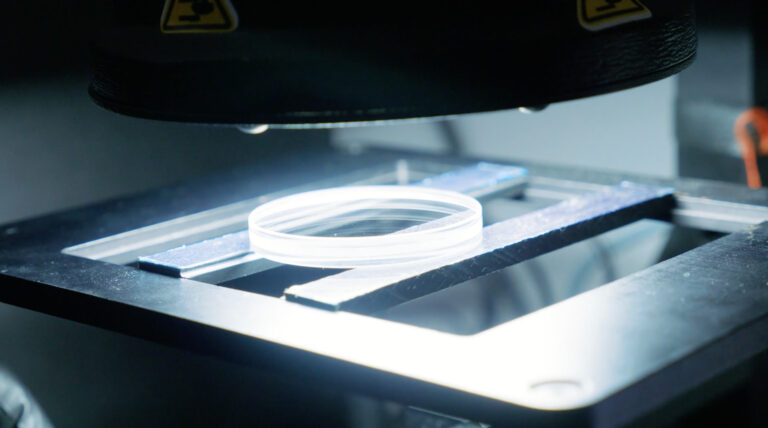
Our thin film coating technologies deposit layers of transparent dielectric materials onto optical substrates in a vacuum chamber in order to change the optical characteristics of a component for various applications.
The difference between metallic and dielectric coating comes down to their thickness. Dielectric coatings are typically measured in submicrons, making them especially well-suited for advanced laser applications. They are much more resistant to damage than your typical optical mirror.
Metal coatings applied to optical substrates are quite delicate. They usually require a protective or enhanced metal coating to allow for their handling and cleaning. Blue Ridge specializes in the application of these enhanced metal coatings.
Applying dielectric overcoats to the surface of a metallic mirror enables you to handle your optical component, as well as increasing the component’s durability and protecting it against oxidation. As stated above, Blue Ridge also applies dielectric layers to enhance the reflectance of your optic.
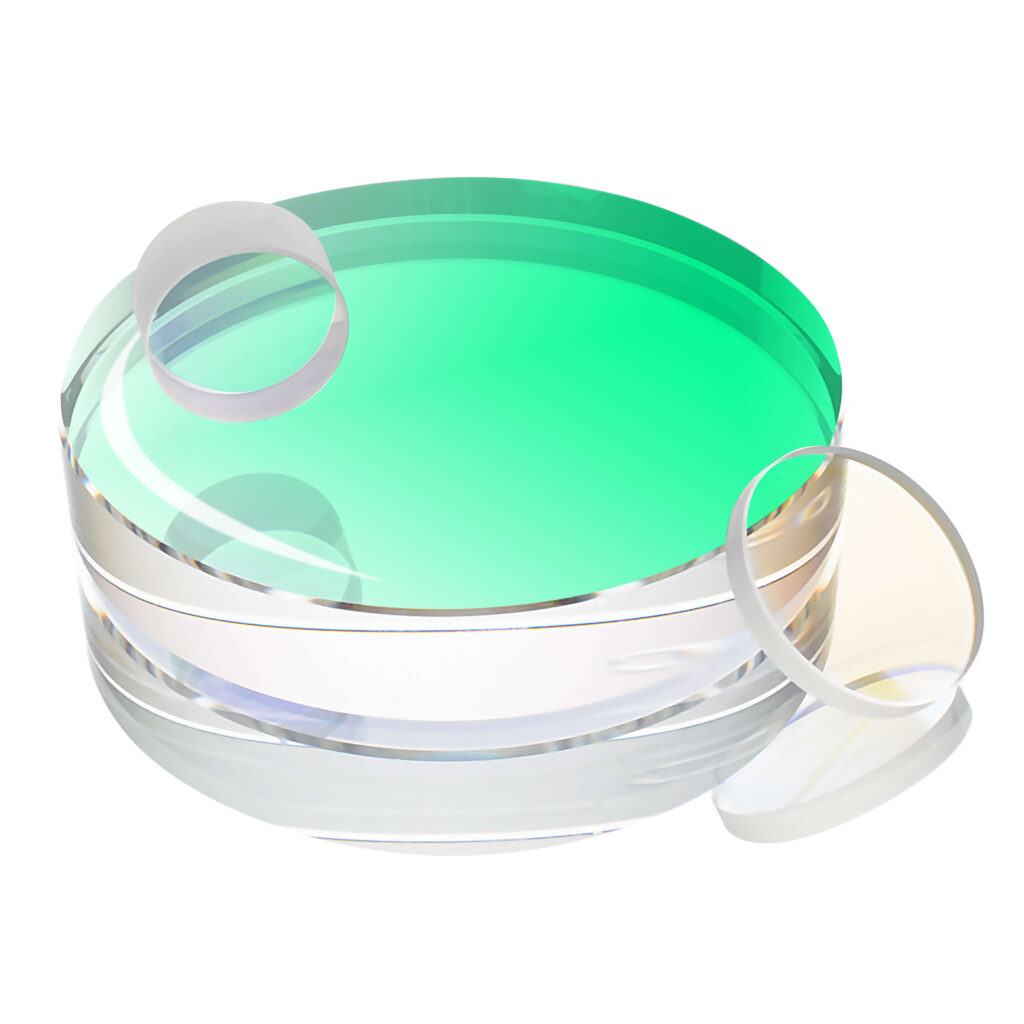
Partially-reflective coatings are applied to optical substrates. They are used as output couplers or as beam splitters in advanced laser applications, which require precision in changing the direction of a laser or light source.
These coatings are, as the name indicates, applied to the optical components of partial reflectors. Partial reflectors are used in laser cavities or on the outside of a laser system to split a beam. Coatings can be specified for normal incidence inside the laser cavity, or at a 45° angle on the outside of a system.
Low-loss and low-absorption coatings are techniques for reducing the light loss and light absorption in optical components. Using specialized coating techniques, low-absorption/low-loss mirrors and other components are regularly used in advanced laser applications.
Deploying a low loss or low absorption coating minimizes scatter across the dielectric layers of an optical substrate. Blue Ridge Optics has decades of experience developing these unique coatings for our clients.
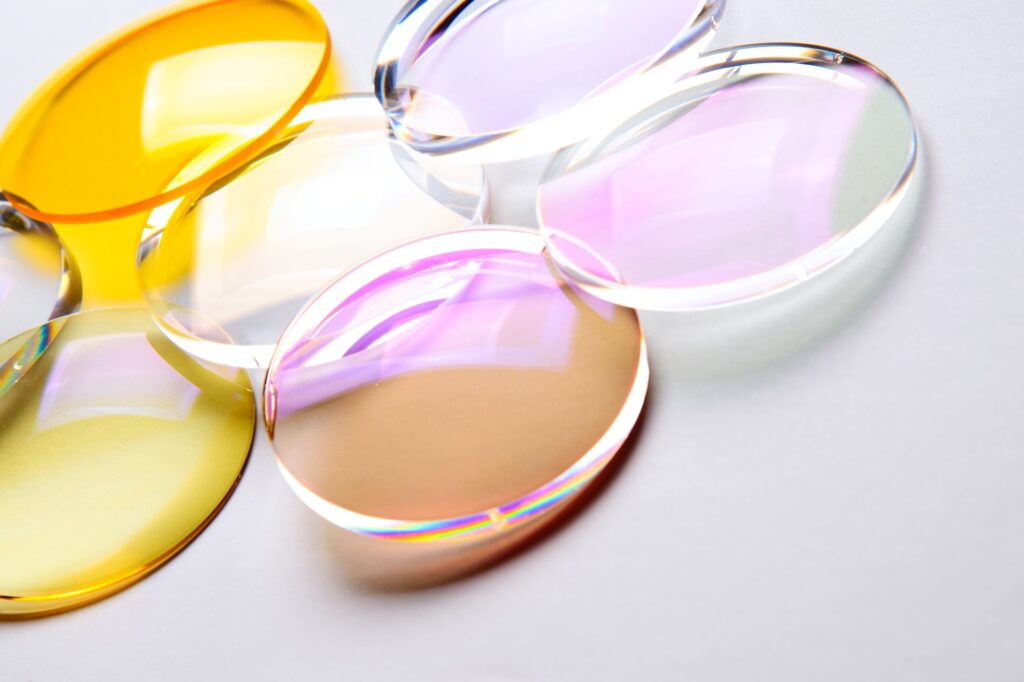
Indium-Tin-Oxide (ITO) Coating – also known as Conductive or Transparent Coating – is a popular material for thin film optics due to its electrically conductive and optically transparent properties.
ITO coatings are used in a number of industrial applications such as electrical heating and solar cell panels, where they eliminate static. When it comes to laser systems, ITO coatings play an important role in allowing light to pass through a system. This coating is perfect for applications with high-optical absorption.
Blue Ridge Optics supplies optical components that are used in some of the most advanced assemblies and systems. Many OEM companies have come to rely on us for the best in optical engineering and coatings, backed by our
quality assurance and compliance protocols.
The optical coatings listed above give a general overview of our capabilities, but our expertise in creating custom coatings for advanced laser applications is where we truly excel. It is our custom engineering capabilities that set us apart from the rest of the market.
Blue Ridge Optics’ proprietary thin film coatings have been used in the world’s most advanced and powerful laser systems.
With our strong emphasis on research and development, and our close ties to the latest techniques and innovations in our sector, we are always evolving to meet our customers’ thin film coating needs.
Our thin film coating deposition chambers come equipped with the industry’s latest and most sophisticated vacuum and monitoring technologies. We employ both optical and crystal monitoring to ensure consistent and repeatable measurements throughout the deposition process.
Blue Ridge Optics often deploys Advanced Plasma Sputtering (APS) when we need to fulfill high volume orders for our customers. APS is highly efficient, while still making for a dense and accurate thin film deposition.
With a quality similar to Ion Beam Sputtering (IBS), APS has the high throughput capabilities common to evaporative deposition techniques. Our APS deposition process can produce advanced optical components with well over 200 layers, without sacrificing precision, optical density, or transmission.
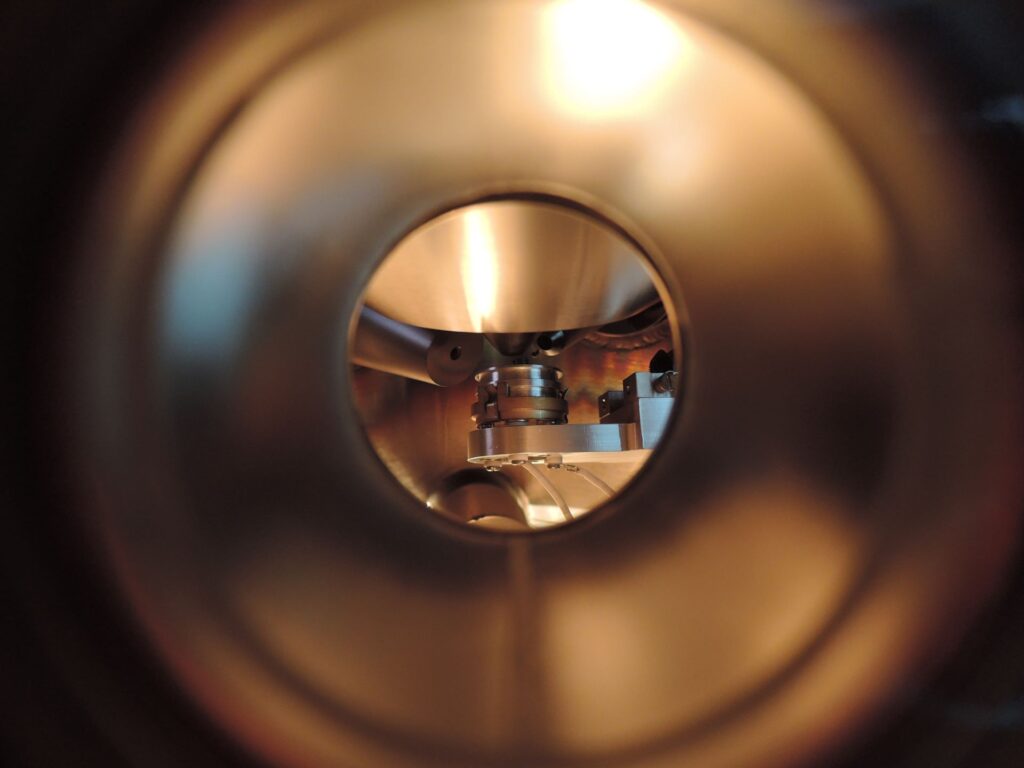
Electron Beam Deposition (E-Beam vapor deposition) attacks the source material of your optic with electron beams. Placed in a vacuum chamber, the electron beams quickly evaporate the materials, depositing them on your component.
The thin film coatings that result from Electron Beam Deposition have low strain, which allows them to be applied to an expansive variety of component materials and geometric shapes. Electron Beam Deposition is especially useful in the development, design, and manufacture of custom-shaped optics.
Similar to traditional electron beam deposition, Ion-Assisted Electron-Beam Deposition (IAD E-Beam) blasts your substrate with a beam of accelerated electrons from an ion gun to increase the energy of deposited atoms.
With Ion-Assisted Electron Beam Deposition, the higher mobility of electrons creates a denser film on your optical substrate. At the same time, it also elevates stress on the optic. The decision regarding whether to use Ion-Assisted or conventional Electron Beam Deposition depends entirely upon your application.
When you include thermal resistance and ion beam sputtering techniques to the list, Blue Ridge Optics has the breadth of capabilities necessary to produce optics that meet your exact specifications. When deploying advanced laser systems, you need an optics partner that can support a variety of needs. Contact us today to discuss your next project.